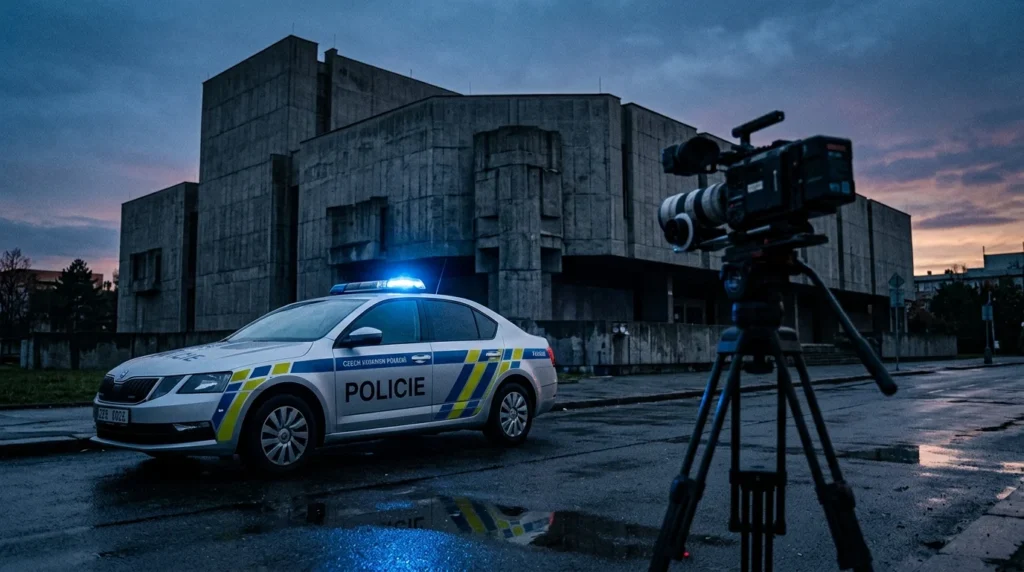

Nine individuals connected to a Czech pornography operation are now standing trial on human trafficking charges — and the case sends a stark warning to everyone working in the adult entertainment industry worldwide.
According to Prague city prosecutors, the defendants — including organisers, financiers, casting producers, photographers, camera operators, and actors involved in a project called Czech Casting — face up to 12 years in prison. The indictment runs to 629 pages.
What Allegedly Happened
Between 2016 and 2019, investigators allege the group placed advertisements for modelling jobs targeting women aged 18 and over. But according to the Czech organised crime unit (NCOZ), those offers were “no more than a veil for the production and subsequent distribution of pornographic films.”
Prosecutors claim that during casting sessions, organisers “created the impression of a rush or played down the importance of the agreements signed” in order to secure consent. Hundreds of women are believed to have been affected, with at least 18 formally identified as victims. Many reportedly suffered serious psychological and physical health consequences, requiring long-term medical treatment.
The defendants deny the charges, with the defence expected to argue that the women consented and had signed contracts clearly specifying the content of the videos. But prosecutors contend the recruitment process itself was inherently deceptive — and that coercion doesn’t always look like force.
Prague has been a hub for the adult entertainment industry since the post-1989 liberalisation following the Velvet Revolution, when relaxed censorship laws and a transition to a market economy attracted producers from across the world. This case, however, illustrates how that legacy can carry a darker side.
Lessons for the Adult Industry
Regardless of the outcome of the trial, this case exposes systemic vulnerabilities that legitimate professionals in the adult industry should take seriously — both ethically and legally.
1. Transparency in recruitment is non-negotiable
If your advertisement says “modelling” but the job is pornography, you are already on dangerous legal and ethical ground. Recruitment materials must accurately and explicitly describe the nature of the work — full stop. Ambiguous job ads are not a grey area; in many jurisdictions, they constitute fraud and can be used as evidence of trafficking intent.
2. Rushed consent is not valid consent
The allegation that casting organisers “created the impression of a rush” to secure signatures is a red flag that any ethical producer should avoid at all costs. Genuine informed consent requires that performers have adequate time to read contracts thoroughly, ask questions, seek independent legal advice if they wish, and make a decision free from pressure. Best practice includes providing contracts in advance — not on the day of filming.
3. Contracts must be specific, plain-language, and understood
A contract “specifying the content of videos” is only meaningful if the signer genuinely understood what they were signing. Contracts should be written in plain language, available in the performer’s native language, and explained clearly. Boilerplate legalese that obscures the nature of the work provides no ethical or, increasingly, legal protection.
4. The presence of a signature does not equal the absence of coercion
Defence arguments that hinge purely on the existence of a signed contract underestimate how coercive environments can undermine meaningful consent. If performers feel pressured, deceived, or confused about what they’ve agreed to, no signature changes that reality — and courts are increasingly recognising this.
5. Know who you are working with at every level
The case implicates not just the organisers but also photographers, camera operators, and actors. Everyone on set has a responsibility to ensure the people they are working with are there freely and knowingly. “I was just doing my job” is not a legal or moral shield. Industry professionals should have clear protocols for raising concerns and refusing to participate when something feels wrong.
6. Performer welfare must be an ongoing commitment, not a box-ticking exercise
The fact that many women reportedly suffered serious psychological and health consequences after filming highlights a duty of care that extends beyond the moment the cameras stop rolling. Reputable studios should have robust aftercare policies, access to counselling, and clear channels for performers to raise concerns — during and after production.
7. Regulatory compliance is your best protection
Membership of industry bodies, adherence to performer safety standards (such as those developed by organisations like the Free Speech Coalition), and proactive cooperation with law enforcement distinguishes legitimate operations from exploitative ones. Self-regulation, when done seriously, also makes bad actors harder to hide behind.
8. The industry’s reputation depends on accountability
The adult entertainment industry often argues — rightly, in many cases — that it deserves to be treated like any other business. But that argument only holds water when businesses within the industry hold themselves to genuine ethical standards. Cases like this one inflict reputational damage on every legitimate producer and performer. Silence and inaction in the face of bad practice is complicity.
The Czech Casting trial is a reminder that exploitation can be structured, bureaucratic, and dressed up in the language of legitimate business. The 629-page indictment did not emerge from nowhere — it emerged from a pattern of behaviour that many people, at many points, could have challenged.
For those working in the adult industry who want to be on the right side of history — and the law — the time to act on these lessons is now, not after the cameras start rolling.
Sources include: https://www.euronews.com/my-europe/2026/06/30/czech-porn-studio-staff-stand-trial-over-alleged-trafficking-of-women