
Ukraine’s Porn Crackdown: Police Corruption Exposed as Legalization Push Stalls**
For American and European Adult Webmasters
The Raid
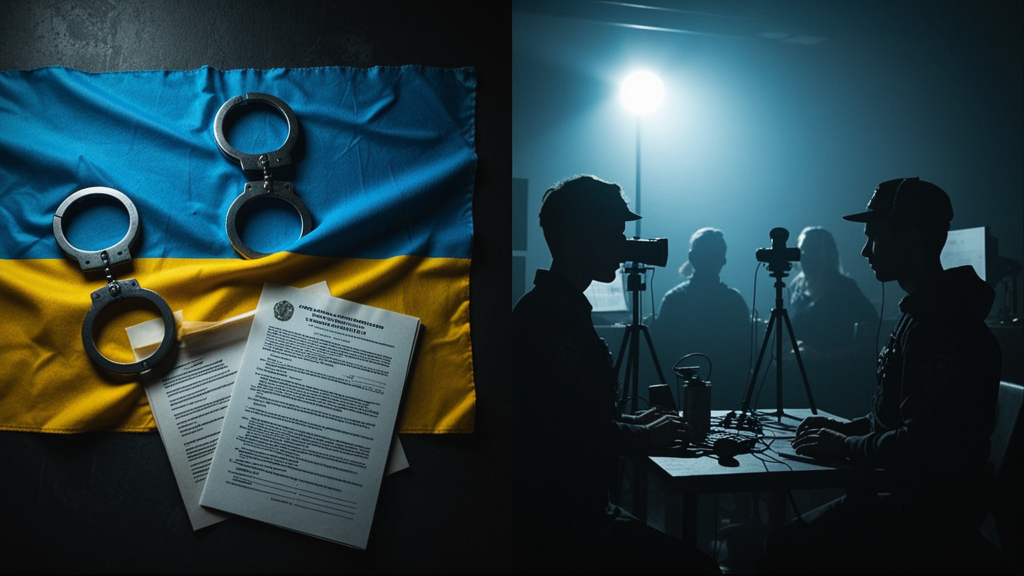
On May 20, 2026, Ukrainian authorities detained five senior police officials in a coordinated anti-corruption operation that exposed a sprawling bribery network protecting underground pornography studios. Among those arrested were the police chiefs of Ivano-Frankivsk Region and his deputy, deputy police chiefs from Ternopil and Zhytomyr regions, and a fifth suspect who served as a driver for a deputy interior minister—allegedly acting as a money courier in the scheme.
The investigation revealed that adult content producers were paying approximately $25,000 per studio monthly to shield their operations from law enforcement scrutiny. When authorities executed search warrants, they seized six luxury vehicles, five high-end Swiss watches, and roughly $510,000 in cash.
The message from Prosecutor General Ruslan Kravchenko was clear: the era of police protection rackets in the adult industry is ending—at least for now.
The Legal Paradox
Here’s where it gets complicated for industry observers: pornography production remains flatly illegal in Ukraine under Article 301 of the Criminal Code. Yet the country simultaneously collects taxes from platforms like OnlyFans through what’s known as the “Google tax” system. Ukrainian creators, however, cannot legally declare their income from adult content—even if they want to.
This contradiction has created a surreal environment where:
- Over 5,000 Ukrainian OnlyFans creators earned approximately $120 million between 2020–2022
- OnlyFans has generated over $920,000 in VAT revenue for Ukraine’s state budget in just six months
- Individual creators report monthly earnings around $1,000, while larger agencies pull in $1–2 million monthly—with roughly one-third allegedly going to police protection
- Six people have been sentenced for OnlyFans-related work in the past three years
“It’s absurd,” MP Yaroslav Zheleznyak told the Kyiv Independent. “It’s stupid to collect taxes for that and say it’s criminal at the same time.”
The Failed Push for Reform
In November 2024, Zheleznyak and a cross-factional group of lawmakers submitted Bill 12191, which sought to decriminalize—not fully legalize—the production and storage of pornographic content by consenting adults. The bill explicitly excluded child pornography, prostitution, and human trafficking from any protections.
The economic argument was compelling. With Ukraine facing chronic budget deficits during wartime, officials estimated potential tax revenue of nearly $24 million annually from properly regulated adult content creation. A parliamentary committee backed the legislation.
Yet the bill stalled. Despite a petition reaching the 25,000-signature threshold required to force a presidential response, and despite Zelensky acknowledging the issue, the Verkhovna Rada never brought it to a vote.
Critics—including law enforcement officials and conservative lawmakers—warned that decriminalization could worsen child exploitation. The Prosecutor General’s office noted that Ukraine registered nearly 2,000 cases of child pornography, arguing that resources should focus on those crimes rather than “private nude photographs.”
What This Means for Webmasters
For American and European adult industry operators, Ukraine represents both opportunity and risk:
The Opportunity: Ukraine has a well-developed IT infrastructure, English-speaking talent pool, and significant experience in digital content production. OnlyFans itself has relied on Ukrainian moderators and support staff. The potential for a regulated, taxable adult content industry is substantial—if the legal framework ever aligns with economic reality.
The Risk: The current crackdown signals that Ukraine’s legal environment remains hostile to adult content production. The police raids demonstrate that even with informal protection arrangements, studios operate under constant threat. The corruption investigation may temporarily disrupt the existing underground economy, but without legislative reform, it will likely reconstitute itself—just with different gatekeepers.
The Timeline: Don’t expect rapid change. Ukraine remains under martial law, with President Zelensky’s extended authority insulating the government from normal political pressures. Corruption investigations like this one serve dual purposes: genuine anti-graft efforts and political maneuvering. The adult industry is collateral damage in both.
The Bottom Line
Ukraine’s pornography paradox encapsulates a broader post-Soviet challenge: modern digital economies colliding with outdated moral frameworks and institutionalized corruption. The country wants the tax revenue from adult content but refuses to grant it legal status. Police exploit this gray zone for personal enrichment. Creators navigate a minefield of potential prosecution.
For international webmasters, Ukraine remains a high-risk jurisdiction for production or primary business operations. The talent is there. The infrastructure is there. But the legal certainty isn’t—and until Bill 12191 or its successor actually passes, the only predictable element is unpredictability.
The May raids may have disrupted one corruption network. But in a country where pornography is simultaneously taxed and criminalized, the incentives for the next protection racket are already in place.
Sources: Prosecutor General’s Office of Ukraine, Kyiv Independent, Meduza, Ukrainian Parliament records